
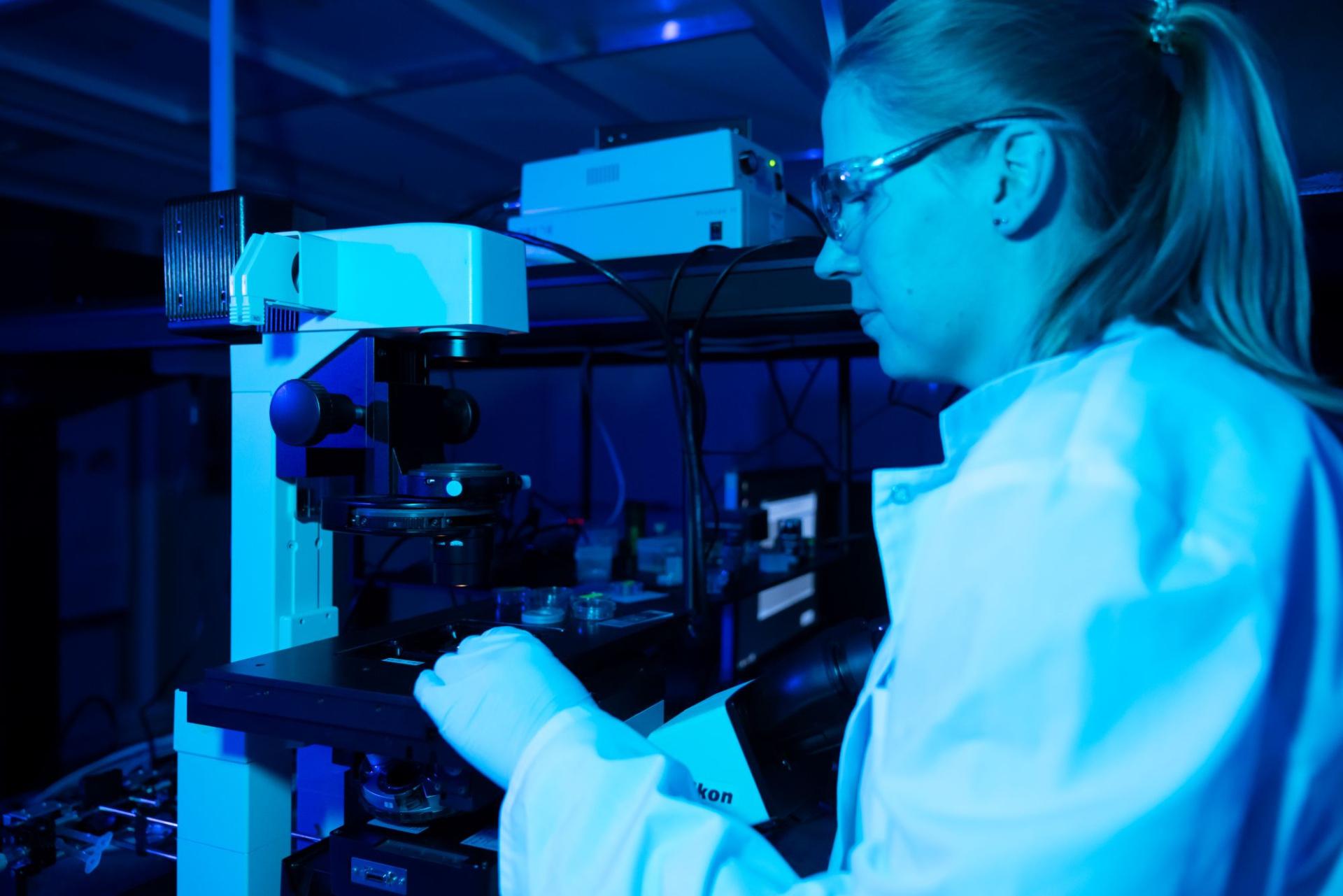
Lithuania is fast becoming one of Northern Europe’s most dynamic testbeds for green innovation. With a strong scientific tradition, an active technology transfer culture, and a growing network of Living Lab infrastructures, the country offers businesses an open door to experiment with new agri-food solutions, advanced technologies, and sustainable materials all in real-life conditions.
From ultrafast lasers to agroecological field plots and sensory laboratories, Lithuania’s research centres are evolving into hands-on innovation spaces where companies co-create with scientists, students, municipalities, and communities. These Living Labs support the EU Green Deal, Farm to Fork strategy, and digital-green transition by giving innovators something invaluable: a safe, professional environment to test, validate, and upscale ideas before market entry.
Below is a tour of Lithuania’s leading Living Lab actors—what they offer, who they serve, and the success stories already emerging.
A Growing Landscape of Living Labs in Lithuania
Lithuania’s Living Labs cover the full spectrum of land, food, environment, and high-tech sectors. They combine scientific excellence with user-centred innovation, prototyping, and demonstration services. These centres not only carry out R&D—they open their infrastructure to businesses, SMEs, municipalities, start-ups, and NGOs seeking real-world testing environments.
The country’s Living Lab ecosystem is anchored by three major players:
- Lietuvos Agrarinių ir Miškų Mokslų Centras (LAMMC): the national agricultural and forestry research institute, with extensive fields, orchards, and greenhouses for plant breeding, agroecology, and environment testing.
- Center for Physical Sciences and Technology (FTMC): the largest state-owned research centre in the Baltics, offering deep-tech laboratories for materials, lasers, coatings, electronics, sensing systems, and nanotechnologies.
- Vilniaus kolegija / University of Applied Sciences - Faculty of Agrotechnologies (VIKO ATF): a strong applied research hub with living labs for food technology, environmental studies, soil and water testing, sustainable landscaping, sensory analysis, and veterinary diagnostics.
Together, they form an interconnected innovation environment where companies - from agtech startups to advanced manufacturing firms - can rapidly move from idea to prototype to validated solution.
Lietuvos Agrarinių ir Miškų Mokslų Centras (LAMMC): Field-Scale Living Labs for Agri-Food Innovation
LAMMC is Lithuania’s national centre for agricultural and forestry science, employing 446 staff, including 184 researchers, and supporting 67 PhD students. It runs major field breeding programs across cereals, vegetables, fruit trees, and berries. Since 1922, LAMMC scientists have developed over 490 plant varieties, many of which are now grown across Europe.
(source: provided text)
Living Lab strengths
- Real-field testing for crops, soil health, biodiversity, climate mitigation, and plant genetics
- Long-term research plots and variety testing fields
- Expertise in agronomy, ecology, environmental science, zoology, botany, and forestry
- Participation in Horizon Europe, territorial cooperation, and national R&D programmes
Industry-focused opportunities
- Testing novel biofertilisers or soil conditioners
- Evaluating climate-resilient crops
- Developing sustainable land-use practices
- Co-creation of agroecological solutions
Notable success example
LAMMC’s breeding programs have introduced varieties that improved yields and resilience, supporting growers in Lithuania and neighbouring countries. Their varieties listed in EU catalogs continue to shape regional food security and climate adaptation strategies.
Plant phenotyping by UAVs at the Lithuanian Research Centre for Agriculture and Forestry (LAMMC)
Center for Physical Sciences and Technology (FTMC): High-Tech Living Labs for Deep-Tech Innovation
FTMC is the largest state-owned scientific research centre in the Baltics, operating across 50 laboratories in Vilnius, Kaunas, and Preila. It employs ~700 staff, including ~500 researchers with PhDs, and supports 111 doctoral candidates.
The centre delivers R&D services, technology transfer, prototyping, and industrial testing, with more than 1420 services provided to 359 companies across 20+ countries since 2018. Its portfolio includes 500+ available services, from nanofabrication to microwave testing and quantum sensing.
Living Lab strengths
- Ultrafast laser development and materials processing
- Optoelectronics, semiconductor structures, optical coatings
- High-frequency and microwave systems (300 MHz to 100 GHz)
- Quantum communication and sensing
- Functional materials, smart textiles, ballistic testing
- Nanotechnology, biochips, organ-on-chip platforms
Success stories
• Industrial laser breakthroughs:
FTMC has co-developed over 20 industrial laser designs, contributing to Lithuania’s global leadership in ultrafast lasers. These systems support medical device manufacturing, precision machining, and defence applications.
• Quantum cascade laser for contactless sensing
Researchers built advanced QCL systems used for detecting contaminants and atmospheric gases—offering potential applications in food safety, environmental monitoring, and precision agriculture.
• Smart textiles and soldier protection systems
FTMC developed adaptive camouflage textiles, radiation-safe materials, and high-performance armor plates using polymer composites suitable for UAV protection—an example of research directly translating into advanced applications.
Why it matters for Living Labs
FTMC offers businesses a rare combination of clean rooms, laser benches, 3D printing facilities, textile testing labs, and anechoic chambers, enabling the full cycle from concept to validated prototype—ideal for companies working on sensors, optics, food packaging, or circular materials.

© State Research Institute Center for Physical Sciences and Technology (FTMC)
VIKO Faculty of Agrotechnologies: Applied Living Labs for Food, Environment & Circularity
VIKO ATF brings a strongly application-oriented Living Lab model, tightly connected with businesses, communities, and municipalities. It operates six analytical laboratories, a Food Technology Lab, a Sensory Lab, a veterinary clinic, and the VikoFlora greening and ornamental plant centre.
With 293 students, 59 staff, and five applied study programmes, the faculty serves as a bridge between research, education, and industry.
Living Lab strengths
- Food technology & processing (fermentation, freeze-drying, new product development)
- Sensory analysis & consumer behaviour studies
- Soil, water, chemical, and biochemical analysis
- Urban greening & sustainable landscaping trials
- Veterinary diagnostics and animal health monitoring
Industry-focused services
- Development of new recipes and functional ingredients
- Chemical composition and safety testing
- Shelf-life and sensory profiling
- Soil, water, and substrate quality evaluation
- Eco-design and greening solutions
- Applied animal health R&D
Success stories from VIKO’s Living Lab ecosystem
• Reducing food waste across Lithuania (EIT FoodEducators)
VIKO coordinated national food literacy actions in 100+ schools, engaging children and families in practical food-waste prevention and responsible consumption.
• Insect-based fertilisers tested with business (UAB DIVAKS)
The faculty carried out real-field trials on Frass biofertilisers, assessing productivity effects on white mustard and garden plants—a strong example of business-science collaboration accelerating green innovation.
• Co-creating alternative food products with companies
Partnerships with UAB Lašų Duona and SKULAS led to new buckwheat-based products and healthy snacks for the retail and gas-station market. Scientists handled formulation, testing, and sensory validation.
• Sustainable urban greening solutions (Vilnius Municipality)
Living Lab spaces in schools support biodiversity, climate education, and nature-based solutions—embedding research directly into citizen environments.
These examples highlight VIKO’s unique strength: the ability to quickly mobilise students, labs, and local communities to test real solutions in real settings.

Visualisations of the redesigned flower beds
Where Living Labs Meet: A Cross-Sector Innovation Space
Lithuania’s Living Labs work across different scales—from nanoscale devices to forest ecosystems—but they share a common DNA:
- User-driven innovation
- Co-creation with stakeholders
- Open access to facilities
- Testing in real-world conditions
- Support for EU green and digital transitions
Businesses can collaborate through:
- Contract research
- Joint Horizon Europe proposals
- Technology testing
- Student and researcher participation
- Pilot-scale demonstrations
- Multi-actor innovation actions
As seen in the Netherlands Living Lab ecosystem, Lithuania’s approach is also moving toward networked experimentation, where agri-food innovators can test soil amendments at LAMMC, evaluate packaging materials at FTMC, and validate consumer acceptance at VIKO—all within a few hours’ drive.
Looking Ahead: A European Hub for Sustainable Innovation
Lithuania’s Living Labs are positioned to play a central role in European missions—from soil health to climate adaptation, circular food processing, and biodiversity restoration. Upcoming proposals (e.g., in agroecology, food waste reduction, soil remediation, and FutureFoodS topics) show how these centres are actively integrating into major EU innovation ecosystems.
For companies seeking to develop solutions that are tested, validated, and ready for scaling, Lithuania offers an open, ambitious, and collaborative Living Lab environment—rooted in science, connected with communities, and aligned with Europe’s transition goals.