

Plant-based milk alternatives are key to a sustainable diet. However, fluctuating raw material qualities and unused side streams often hinder their full potential. The "Food Production 4.0" project demonstrates how the Future Food Factory OWL (FFF OWL) Living Lab uses Artificial Intelligence and holistic upcycling to shape the oat drink of the future—making it more efficient, higher in quality, and more resource-friendly.
The Challenge: Rigid Processes vs. Natural Products
Oats are regional, eco-friendly, and healthy. But as a natural product, they are subject to variations: different varieties and climatic conditions lead to varying levels of starch, proteins, and fiber. Conventional production plants often operate with rigid processes that cannot react to these differences. The result is inconsistent product quality or lower yields. Furthermore, a valuable part of the grain—the pomace (okara)—often remains unused or ends up as animal feed.
The Solution: A Living Lab for Adaptive Production
At the Future Food Factory OWL Living Lab, researchers from ILT.NRW bring together companies and start-ups to test two innovative approaches under real-world conditions:
- Holistic Raw Material Utilization: Instead of disposing of the okara, it is broken down through enzymatic post-treatments. Valuable proteins are extracted and used to fortify the drink—creating high-protein barista variants directly from the raw material side stream.
- AI-Powered Soft Sensing: In the Living Lab's pilot plant, sensors capture parameters like sugar content and viscosity in real-time. Using Artificial Intelligence and innovative methods, such as acoustic analysis of the mash using microphones, the system automatically adjusts to the raw material quality.
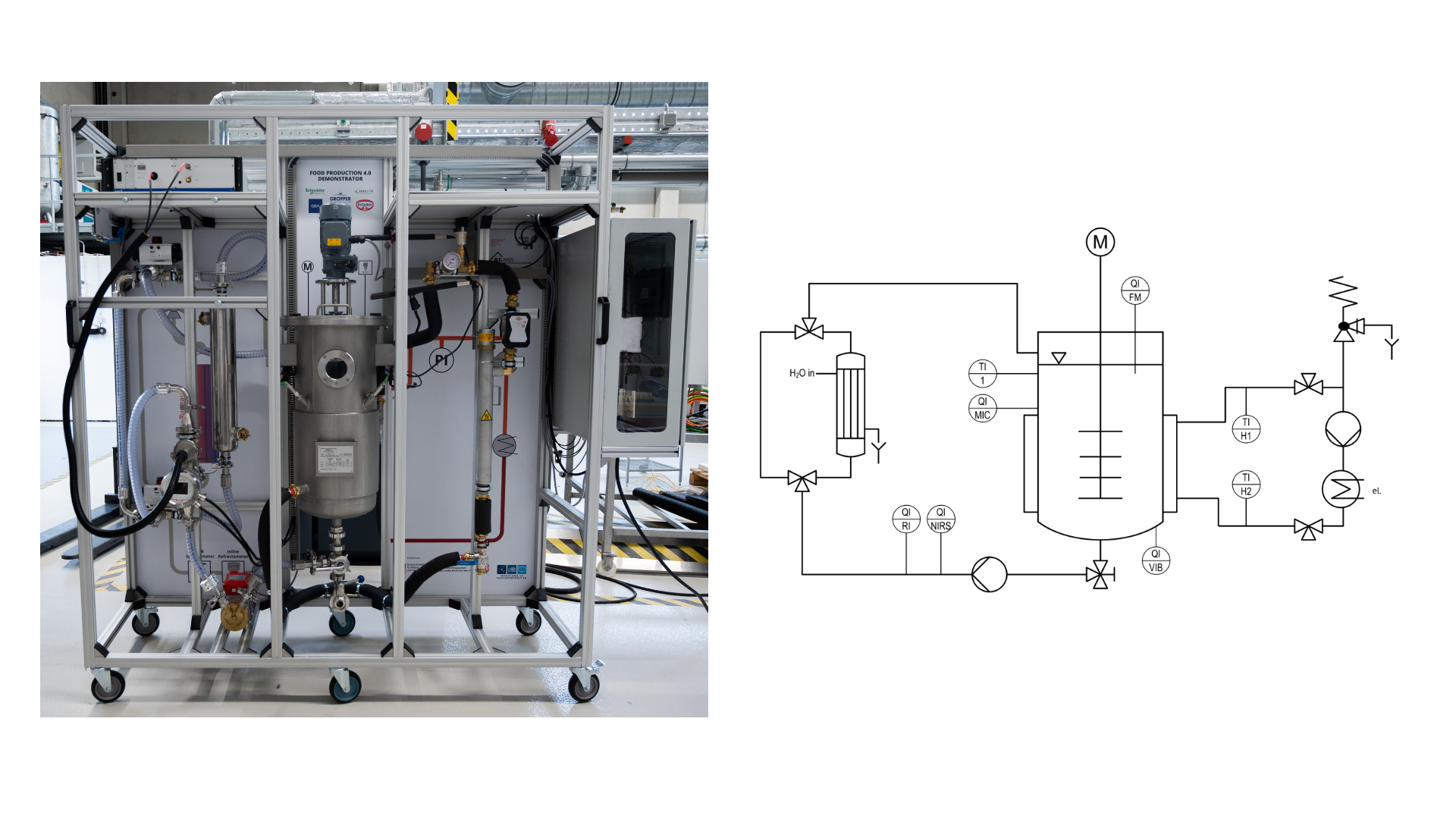
Interactive Testing: The demonstrator in the Living Lab allows new measuring devices and algorithms
to be validated under realistic conditions before they are implemented in industrial practice.
The Impact: Efficiency Meets Sustainability
This technological leap makes production not only more sustainable but also more economical.
- Resource Efficiency: The "refinery concept" ensures that raw materials are used more completely, treating side streams as valuable resources rather than waste.
- Consistent Quality: Thanks to AI-supported control, the mouthfeel and taste of the oat drink remain at the highest level, as the plant reacts individually to every single batch.
- Transfer Platform: As a Living Lab, the FFF OWL serves as a bridge, making modern technologies like soft sensing and AI tangible and applicable for the entire food industry.
A True Model for the Future
The project proves that modern food production is about much more than just processing. In the Future Food Factory OWL Living Lab, the combination of engineering expertise and Artificial Intelligence becomes a reality, making food nutritionally more valuable and environmentally friendlier.


