
Over the past months, in many conversations, we have heard the same message repeated in different ways: Living Labs become much more powerful when they work together. Not only to avoid duplicating infrastructure and effort, but also to tackle shared barriers, like funding, governance, and access for SMEs, and to strengthen each other in delivering services to companies.
Why this matters for the food sector: better collaboration between Living Labs should make it faster and easier to test and validate innovations, with clearer expectations on costs, timelines, and outcomes, especially when you need to move from idea to implementation.
That’s exactly why in The Netherlands we started organising Living Lab Lunches: practical meet-ups where Living Labs, entrepreneurs, knowledge institutions, and public stakeholders can connect, exchange experiences, and co-create the next steps needed to strengthen our Living Lab landscape.
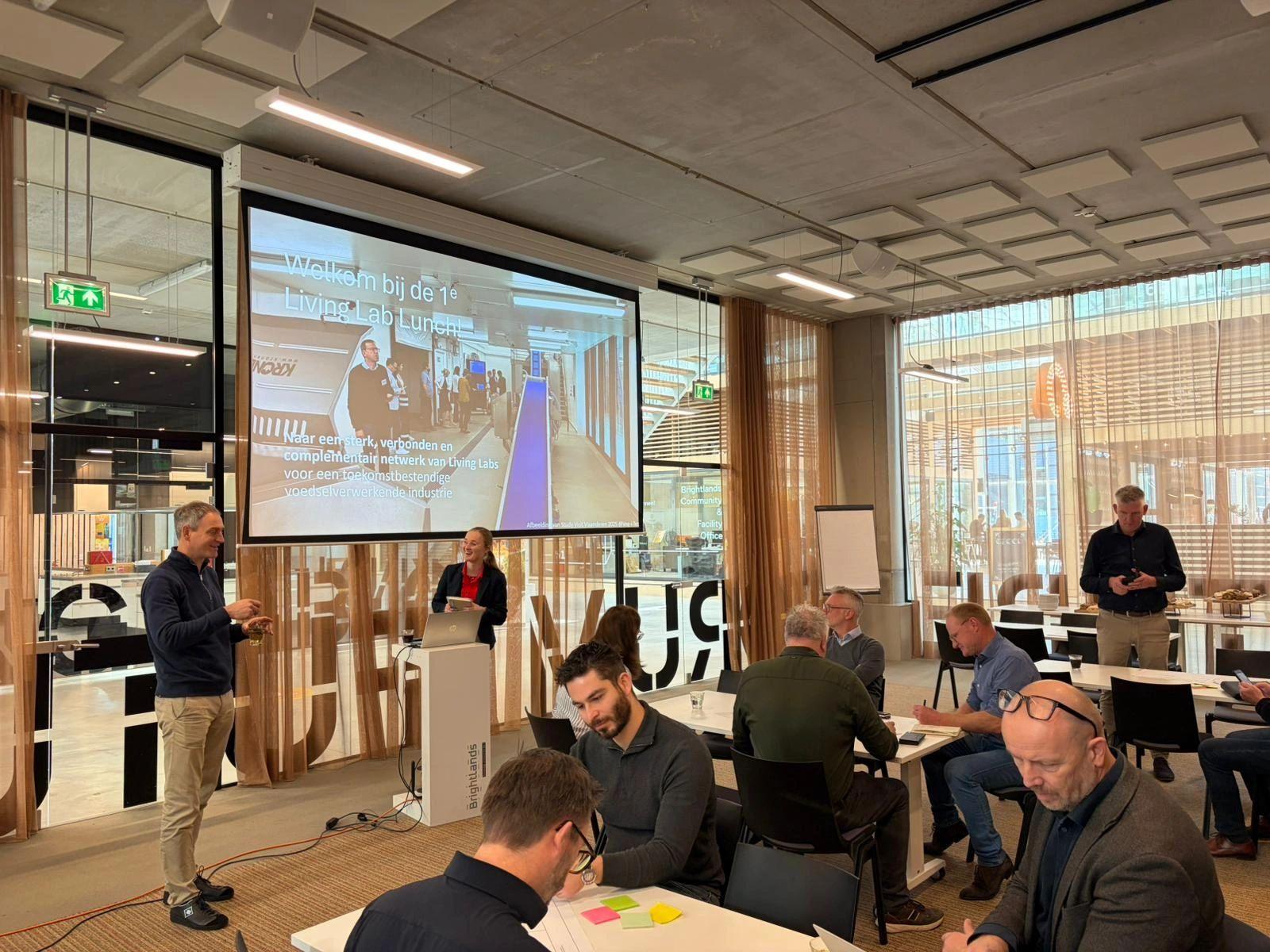
Living Lab Lunch #1 at Brightlands Campus Venlo
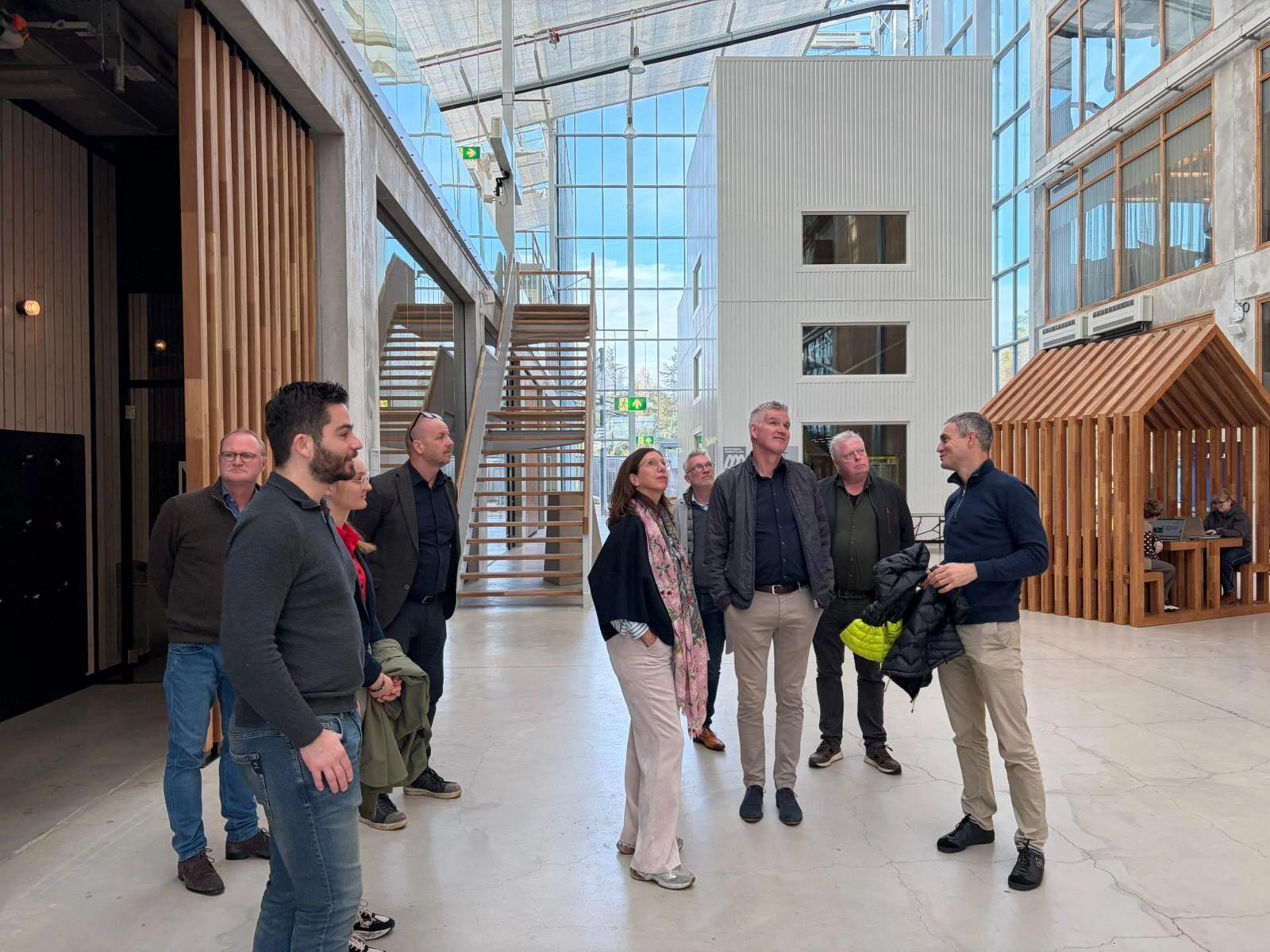
On 11 November, we hosted our first Living Lab Lunch at Brightlands Campus Venlo. We started with a campus tour to explore the ecosystem and companies on-site, before diving into a co-creation session using SIXFOLD methodologies.
Topic (also central in the study visit to Vilnius):
How can we finance Living Labs and their services in a way that lowers barriers for companies (especially SMEs and start-ups), while ensuring quality and continuity?
Examples of what companies want to do in Living Labs (and what we heard in the room):
- run quick tests/validation before scaling,
- prove feasibility of a new process/technology (e.g., sensing, automation, data-driven optimisation) without disrupting your own production processes,
- move faster from innovation to implementation in real-world settings.
Key needs and opportunities
During the discussion, we explored different barriers and opportunities related to this question. The identified barriers and needs that stood out most:
1) Need for stronger alignment and clear coordination
Living Labs and funding are organised differently across regions and actors (public/semi-public/private). This can create silos and makes collaboration, especially cross-regional/cross-border, more complex than it needs to be.
Opportunity! shared governance and alignment (a “BV Netherlands” mindset): clearer roles, harmonised ways of working, and easier collaboration beyond administrative borders with central coordination.
2) Need for clearer positioning and transparency for companies
With many Living Labs operating in different formats and at different maturity levels, SMEs don’t always know where to go, what to expect, or what outcomes and impact (ROI) to anticipate.
Opportunity! Clear positioning and transparency: per lab publish services, TRL focus, lead times, IP/data basics and example outcomes, supported by a simple gateway so companies quickly reach the right facility.
3) Need for faster funding and access for quick testing and implementation
Companies, especially SMEs, often need fast testing and validation, while funding instruments and procedures can be too slow or project-heavy. At the same time, Living Labs need continuity for core functions like intake, coordination and service delivery.
Opportunity! Easy and faster funding via a Demonstration–Feasibility–Investment voucher approach, with light applications, measurable KPIs, and a clear follow-up pathway.
Next steps?
These barriers and opportunities will be translated to concrete actions. If you would like to learn more, connect to the Dutch network, or contribute to the next steps, please reach out.
Next Living Lab Lunch: 12 February at QING Food Automation, focused on Data, AI and Digital Twins, including a lab tour. Interested?
Contact our Dutch partners to join:
Lisanne van Oosterhoud | l.vanoosterhoud@brainportdevelopment.nl
Martin van Rooij | m.vanrooij@agrifoodcapital.nl

